Aortic Stenosis
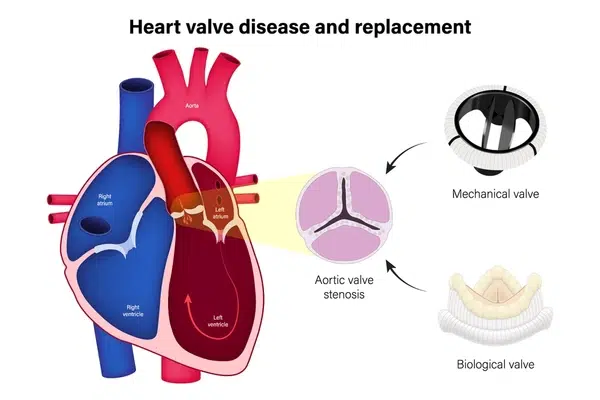
Aortic stenosis is narrowing of the aortic valve, which restricts blood flow out of the heart. When it becomes severe or causes symptoms, it is treated by repla
Aortic stenosis is narrowing of the aortic valve, which restricts blood flow out of the heart. When it becomes severe or causes symptoms, it is treated by replacing the aortic valve. VNR coordinates aortic valve surgery at DDMM Heart Institute in India.
What it is
The aortic valve controls blood flow from the heart to the body. When it narrows, the heart must work much harder, which can lead to chest pain, fainting and heart failure if untreated.
Severe or symptomatic aortic stenosis is treated by replacing the valve with a mechanical or tissue valve, based on your age and health.
Common symptoms
- Breathlessness on exertion
- Chest tightness
- Dizziness or fainting
- Fatigue
- A heart murmur
How it is diagnosed
Aortic stenosis is diagnosed and graded with an echocardiogram, which measures how narrow the valve has become.
Treatment options & cost
Common Questions
FAQs: Aortic Stenosis
Generally when it becomes severe or causes symptoms such as breathlessness, chest pain or fainting. The DDMM team advises based on your echocardiogram.
Either a mechanical or a tissue valve, chosen based on your age, health and preference, discussed with the surgeon.
Send us your cardiac reports. We reply within 48 hours.
Free clinical review by the DDMM cardiac team. No obligation. Our international patient coordinators reply 7 days a week.