Shortness of Breath and Fatigue: Could It Be a Heart Valve Problem?
By VNR Medical Service Editorial Team · Reviewed in line with our Medical Review Policy · June 12, 2026
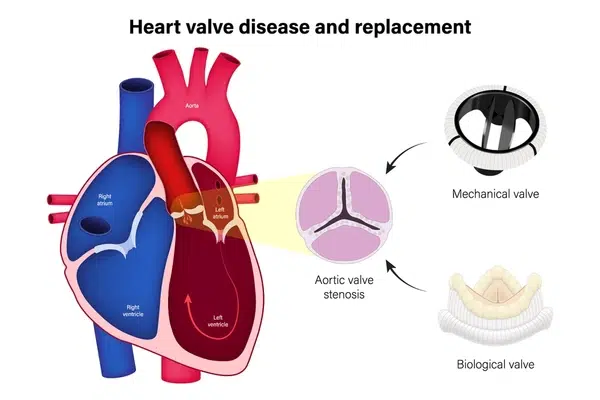
Shortness of breath and fatigue, especially when they worsen over weeks or months or appear with mild activity, can be a symptom of heart valve disease. A narrowed or leaking valve makes the heart work harder and reduces the oxygen reaching your body. An echocardiogram can confirm the diagnosis, and treatment ranges from monitoring to valve repair or replacement.
Feeling breathless after climbing stairs, or unusually tired by the end of the day, is easy to blame on age or being unfit. But persistent shortness of breath and fatigue can also be early signs of a heart valve problem. The heart has four valves that keep blood flowing in the right direction, and when one of them stops working properly the whole body can feel the effect. This guide explains how to tell the difference, what causes valve disease, and what can be done about it.
What do the heart valves do?
The heart has four valves, the aortic, mitral, pulmonary and tricuspid, which open and close with every heartbeat to keep blood moving forward and prevent it from flowing backward. When a valve works well you never notice it. When it does not, blood flow becomes inefficient and the heart compensates by working harder, which eventually produces symptoms such as breathlessness and tiredness.
Two main types of valve problem
There are two broad ways a valve can fail. In stenosis the valve becomes stiff and narrowed, so it cannot open fully and blood has to squeeze through a smaller opening. In regurgitation, sometimes called a leaky valve, the valve does not close properly and blood leaks backward. Some people have both at once. The most common serious valve condition in adults is aortic stenosis, a narrowing of the aortic valve. You can read about the full range of valve problems on our heart valve disease page.
Symptoms of heart valve disease
Valve disease can develop slowly, and the body adapts so gradually that people often do not notice how limited they have become. Watch for:
- Shortness of breath, especially on exertion or when lying flat
- Fatigue and reduced ability to do normal activities
- Swelling in the ankles, feet or abdomen
- Palpitations or a fluttering, irregular heartbeat
- Dizziness or fainting, particularly with aortic stenosis
- Chest discomfort during activity
- A heart murmur, an extra sound a doctor hears through a stethoscope
The British Heart Foundation notes that valve disease is often picked up when a doctor hears a murmur during a routine examination, even before symptoms become obvious. This is why regular check ups matter.
When should breathlessness worry you?
Occasional breathlessness during hard exercise is normal. It is more concerning when shortness of breath:
- Appears with mild activity that never used to trouble you
- Wakes you at night or forces you to sleep propped up on pillows
- Comes with swelling, palpitations, dizziness or chest discomfort
- Is getting steadily worse over weeks or months
Any of these patterns deserves a medical assessment. Fainting, severe breathlessness at rest, or chest pain need urgent care.
What causes valve disease?
Valve problems have several causes. Age related wear and calcium buildup is the most common cause of aortic stenosis in older adults. Some people are born with an abnormal valve, such as a bicuspid aortic valve, which tends to wear out earlier. Infections of the heart lining, previous heart attacks affecting the valve muscles, and certain other medical conditions can also damage valves.
Rheumatic heart disease, a preventable cause
In many parts of South Asia, Africa and the Middle East, rheumatic heart disease remains an important cause of valve damage. It develops when a streptococcal throat infection in childhood is not properly treated and the immune response goes on to scar the heart valves, often the mitral valve. Because it is preventable with prompt treatment of throat infections, awareness is important, and patients from these regions are more likely to need valve surgery at a younger age.
How is valve disease diagnosed?
The key test is an echocardiogram (ECHO), an ultrasound scan that shows the valves moving in real time and measures how narrowed or leaky they are. A doctor may also use an ECG, a chest X ray, and sometimes more detailed scans or a cardiac catheter study before planning treatment. If you already have an echocardiogram report, a specialist can review it and advise whether treatment is needed. VNR offers a free review of your cardiac reports for this purpose.
Treatment options for heart valve disease
Not every valve problem needs surgery straight away. Mild disease is often monitored with regular scans. When a valve becomes significantly narrowed or leaky and symptoms appear, treatment is recommended to protect the heart.
Valve repair
Where possible, surgeons prefer to repair your own valve rather than replace it, because keeping the natural valve has advantages and may avoid the need for lifelong blood thinning medication. Repair is often suitable for certain leaking mitral valves.
Valve replacement
When a valve is too damaged to repair, it is replaced with either a mechanical valve or a tissue valve. The choice depends on your age, lifestyle and whether you can take long term blood thinning medication. Our page on heart valve replacement and repair explains the options in more detail.
Minimally invasive and TAVI procedures
For some patients, particularly those at higher surgical risk, a narrowed aortic valve can be treated with a catheter based procedure that places a new valve without open surgery. Suitability is decided case by case by the heart team after reviewing your scans.
What to expect from valve surgery and recovery
Valve surgery is a well established procedure. Patients typically spend a few days in hospital, including time in intensive care immediately after surgery, followed by a period of supervised recovery before they are declared fit to travel home. Most people feel a marked improvement in breathing and energy once the heart no longer has to fight a faulty valve. Your team will advise on activity, medication and follow up. Patients travelling from abroad usually plan to stay in India for a few weeks in total to cover treatment and early recovery.
Why valve disease should not be ignored
Left untreated, significant valve disease forces the heart to work harder for years. Over time this can lead to an enlarged, weakened heart and to heart failure, and in aortic stenosis it can cause fainting or sudden cardiac events. Timely treatment often produces a dramatic improvement in energy, breathing and quality of life. The challenge is that symptoms creep up slowly, so many patients wait too long before seeking help.
How VNR Medical Service helps
If breathlessness and fatigue have been linked to a valve problem, VNR Medical Service helps international patients access expert valve treatment at the NABH accredited DDMM Heart Institute in India, where the cardiac team performs valve repair and replacement procedures. We coordinate your free report review, an indicative cost estimate, medical visa support, travel, treatment and a safe, fit to fly return. To begin, contact our patient coordination team or send your echocardiogram for review.
Related pages
Common Questions
FAQs
Yes. A narrowed or leaking valve makes the heart work harder and reduces efficient blood flow, which commonly causes breathlessness, especially on exertion or when lying flat, along with fatigue and sometimes swelling of the legs.
The main test is an echocardiogram, an ultrasound scan that shows the valves moving and measures how narrowed or leaky they are. An ECG, chest X ray and other scans may be added before treatment is planned.
No. Mild valve disease is often monitored with regular scans. Surgery or a catheter procedure is recommended when a valve becomes significantly narrowed or leaky and symptoms appear, to protect the heart from long term strain.
Yes. VNR Medical Service coordinates valve repair and replacement for international patients at the NABH accredited DDMM Heart Institute, often at a fraction of Western costs. Start with a free review of your echocardiogram and reports for an indicative estimate.
Send us your cardiac reports. We reply within 48 hours.
Free clinical review by the DDMM cardiac team. No obligation. Our international patient coordinators reply 7 days a week.