Pediatric Heart Surgery in India: A Parent's Guide to ASD and VSD Repair
By VNR Medical Service Editorial Team · Reviewed in line with our Medical Review Policy · June 22, 2026
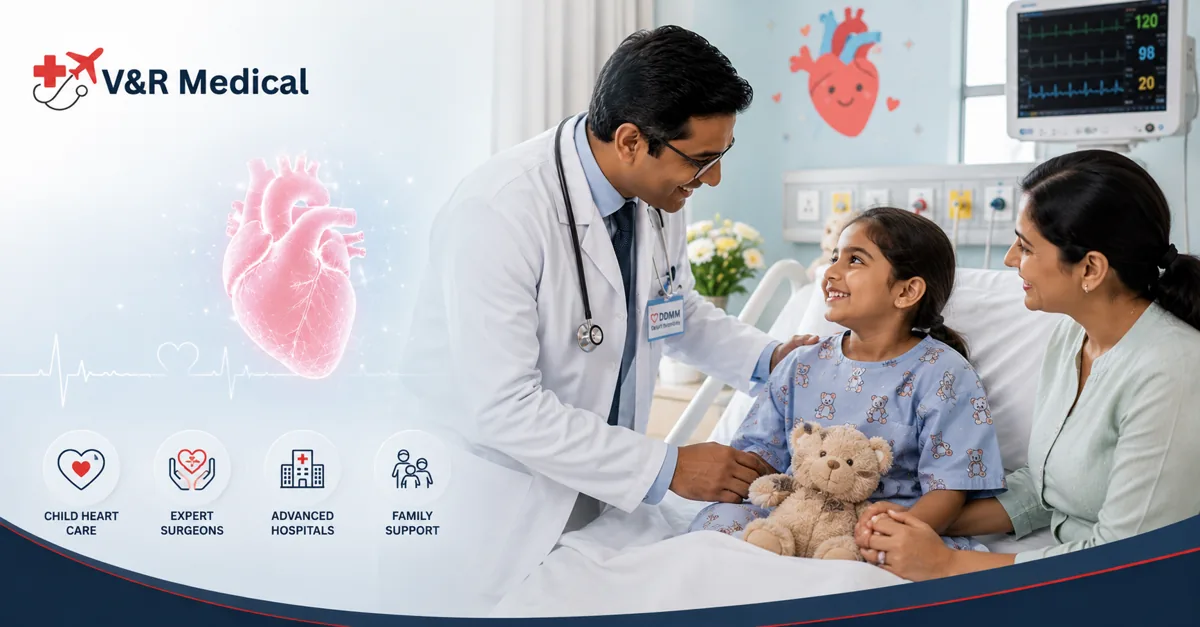
Pediatric heart surgery in India treats congenital heart defects in children, including holes in the heart such as ASD and VSD, at accredited hospitals and at a fraction of Western costs. Many defects are closed with a catheter based device, while others are repaired with surgery. Most children recover well and return to normal, active lives. VNR coordinates the whole journey for international families, including visa support for the child and caregivers.
For a parent, few things are more frightening than learning that a child needs heart surgery. The encouraging reality is that pediatric heart surgery has excellent results, and India has become a trusted, affordable destination for families around the world seeking expert care for their children. This guide explains pediatric heart surgery in India, the common procedures such as ASD and VSD repair, and what the journey looks like for international families.
Why families travel to India for child heart surgery
Families choose India for a combination of reasons. Indian cardiac centres have extensive experience in treating congenital heart conditions, the cost is often far lower than at home, and waiting times are short, which matters when a child needs timely treatment. For many families, long waiting lists or very high private costs at home create dangerous delays, and India offers a faster, affordable path to expert care without compromising on quality. English is widely spoken by medical teams, which eases communication for international families.
Common pediatric heart procedures
ASD and VSD closure
Holes in the heart, namely atrial septal defect and ventricular septal defect, are among the most common congenital heart conditions. Suitable holes can often be closed with a catheter based device passed through a vein in the leg, avoiding open surgery, while larger or complex holes are repaired surgically. Both approaches have excellent results. Our pediatric heart surgery and ASD VSD repair page explains the options.
Other congenital procedures
Children may also need treatment for other congenital conditions, such as a patent ductus arteriosus, valve problems or more complex defects. Each is assessed individually by the pediatric cardiac team, who recommend the safest and most effective approach for the child.
Safety and accreditation
When it comes to a child's heart, parents rightly want reassurance about quality and safety. The DDMM Heart Institute is NABH accredited, the National Accreditation Board for Hospitals and Healthcare Providers, which is India's recognised standard for hospital quality and patient safety. Choosing an accredited hospital with experience in pediatric cardiac care is one of the most important decisions a family can make, and it is central to how VNR selects its hospital partner.
What the journey looks like for families
VNR coordinates each step so that families can focus on their child rather than logistics. The process usually begins with a free review of the child's reports, including the echocardiogram, which allows the specialist to advise on treatment and provide an indicative cost estimate. From there, VNR helps with medical visa guidance for the child and accompanying caregivers, travel planning, and accommodation close to the hospital. Our patient journey and international patient support pages explain the full process.
The cost of pediatric heart surgery in India
One of the main reasons families choose India is affordability. Indicative 2026 costs for procedures such as ASD or VSD closure in India are typically far lower than equivalent private treatment in Western countries, while being carried out by experienced teams in accredited hospitals. The exact figure depends on the specific defect, whether a device or surgical closure is used, and the length of stay. The most reliable way to understand the likely cost for your child is to have the reports reviewed, which VNR provides free of charge.
Recovery and returning home
The outlook for children treated for common defects such as ASD and VSD is generally very good. After device closure, many children go home from hospital within a day or two, while surgical repair involves a slightly longer stay followed by a few weeks of recovery. Before flying home, the child is assessed to confirm they are fit to travel. Most children go on to lead full, active, normal lives, with follow up to confirm the heart is developing well. Families travelling from abroad usually plan a stay of a few weeks to cover treatment and early recovery.
Support for parents
VNR understands how stressful this experience is for parents, and the coordination team supports families throughout, from the first enquiry to the journey home. Having someone to guide you through visas, travel, hospital admission and recovery removes much of the burden at an already difficult time, so you can concentrate on your child. After you return home, VNR and the hospital can support follow up so that your child's care continues smoothly with their local doctor.
How to start
If your child has been diagnosed with a heart defect, the first step is simple and free. Send the child's medical reports for a confidential review and receive an opinion and an indicative cost estimate before making any decision. To begin, contact the VNR coordination team or request a free medical report review.
What makes a strong pediatric heart programme
When choosing where to take a child for heart treatment, parents should look for a few key things: experience specifically in congenital and pediatric cardiac care, recognised hospital accreditation for quality and safety, a full team including pediatric cardiologists, surgeons and intensive care specialists, and clear communication with families. The combination of these elements, rather than any single factor, is what gives the best and safest results for children. VNR selects its hospital partner with exactly these criteria in mind, which is why care is coordinated with the NABH accredited DDMM Heart Institute and its cardiac team.
Questions parents often ask before travelling
Parents naturally have many questions before bringing a child abroad for heart treatment. Common ones include how long the whole trip will take, whether both parents can travel, what documents and visas are needed, where the family will stay, and what happens if the child needs longer care than expected. VNR answers all of these before you commit to anything, so you travel with a clear plan rather than uncertainty. Having the child's reports reviewed first means the treatment plan, likely length of stay and indicative cost are understood in advance, which helps families prepare both practically and emotionally for the journey.
How soon can a child be treated?
The timing of treatment depends on the child's specific condition. Some defects are best treated at a particular age for the safest result, while others need prompt attention if the child has symptoms such as poor feeding, breathlessness or failure to gain weight. Because waiting times in India are generally short, families are often able to arrange treatment quickly once the reports have been reviewed and a plan agreed. This avoids the long delays that families sometimes face at home, which can be distressing when a child is unwell. The first step is always a review of the child's reports, which clarifies how urgent treatment is and what the plan should be.
Related pages
Common Questions
FAQs
Pediatric heart surgery in India is performed by experienced teams in accredited hospitals such as the NABH accredited DDMM Heart Institute. Choosing an accredited hospital with congenital cardiac experience is key to safety, and VNR coordinates care only with such a partner.
Often yes. Many suitable ASDs and some VSDs can be closed with a catheter based device through a vein in the leg, avoiding open surgery. Larger or complex holes are repaired surgically. An echocardiogram guides the decision.
Yes. VNR helps with medical visa guidance for the child and accompanying caregivers, along with travel and accommodation near the hospital, so parents can be with their child throughout treatment and recovery.
Indicative costs in India are typically far lower than private treatment in Western countries, with the exact figure depending on the defect and whether a device or surgical closure is used. VNR provides a free review of your child's reports and an indicative estimate.
Send us your cardiac reports. We reply within 48 hours.
Free clinical review by the DDMM cardiac team. No obligation. Our international patient coordinators reply 7 days a week.