Hole in the Heart (ASD and VSD): A Parent's Guide to Causes and Treatment
By VNR Medical Service Editorial Team · Reviewed in line with our Medical Review Policy · June 16, 2026
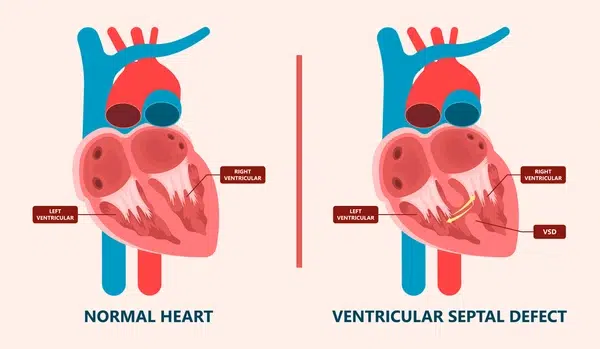
A hole in the heart is a congenital defect in the wall separating the heart's chambers. The two most common types are atrial septal defect (ASD), a hole in the upper wall, and ventricular septal defect (VSD), a hole in the lower wall. Small holes may close on their own, while larger ones are closed with a catheter based device or surgery. Most children do very well after treatment and go on to lead normal, active lives.
Hearing that your child has a hole in the heart is frightening, but it is one of the most common and most treatable heart conditions in children. Many holes are small and close on their own, while others are repaired with excellent results. This guide explains what atrial septal defect (ASD) and ventricular septal defect (VSD) are, the symptoms to watch for, how they are diagnosed, and the treatment options available to families seeking care in India.
What is a hole in the heart?
The heart has four chambers, two upper chambers called atria and two lower chambers called ventricles, separated by walls called septa. A hole in the heart is a congenital defect, meaning a child is born with it, where part of this wall did not form completely. The hole allows blood to flow between chambers in a way it should not, which can make the heart and lungs work harder. These are among the most common congenital heart defects.
Atrial septal defect (ASD)
An ASD is a hole in the wall between the two upper chambers. It allows oxygen rich blood to flow from the left atrium into the right atrium, sending extra blood to the lungs. Small ASDs may cause no symptoms and are sometimes found only in adulthood, while larger ones can strain the heart and lungs over time.
Ventricular septal defect (VSD)
A VSD is a hole in the wall between the two lower chambers. It is one of the most common congenital heart defects. A large VSD allows a significant amount of blood to pass to the lungs and can cause symptoms in infancy, while small VSDs may close on their own as the child grows.
Symptoms of a hole in the heart
Symptoms depend on the size and type of the hole. Small holes often cause no symptoms at all. Larger holes may cause:
- Fast breathing or breathlessness, especially during feeding in babies
- Poor weight gain or difficulty feeding in infants
- Tiring easily during play or exertion
- Frequent chest infections
- A heart murmur heard by a doctor
- Swelling of the legs, feet or abdomen in some cases
The British Heart Foundation notes that many small defects are picked up only because a doctor hears a murmur during a routine check.
How is a hole in the heart diagnosed?
The main test is an echocardiogram, an ultrasound of the heart that shows the hole, its size and how blood is flowing through it. It is painless and safe, which makes it ideal for children. A doctor may also use an ECG and a chest X ray. These reports allow a specialist to advise whether the hole needs closing and, if so, by which method. VNR offers a free review of your child's reports with an indicative cost estimate before you travel.
Does every hole need treatment?
No. Many small ASDs and VSDs cause no problems and a number close on their own during the first years of life, needing only monitoring. Treatment is recommended when a hole is large, when it is causing symptoms, or when scans show it is straining the heart or lungs. Closing a significant hole at the right age prevents long term complications and allows the child to grow and develop normally.
Treatment options for ASD and VSD
Catheter based device closure
Many suitable ASDs, and some VSDs, can be closed without open surgery using a catheter passed through a vein in the leg. A small device is positioned to seal the hole. Recovery is quick and there is no surgical scar on the chest. Suitability depends on the size and position of the hole.
Surgical closure
Larger holes, or those in positions not suited to a device, are closed with surgery, in which the hole is stitched or patched. This is a well established procedure with excellent results in experienced hands. Our page on pediatric heart surgery and ASD VSD repair explains the process in more detail.
Recovery and outlook
The outlook for children treated for ASD or VSD is generally very good. After device closure, most children go home within a day or two. After surgery, the hospital stay is a little longer, followed by a few weeks of recovery. Most children go on to lead full, active, normal lives, with regular follow up to confirm the heart is developing well. For families travelling from abroad, planning a stay of a few weeks usually covers treatment and early recovery.
How VNR Medical Service helps families
VNR Medical Service helps international families access expert pediatric cardiac care at the NABH accredited DDMM Heart Institute in India. We coordinate a free review of your child's reports, an indicative cost estimate, medical visa support for the child and caregivers, travel, treatment and a safe, fit to fly return. We understand how stressful this is for parents, and we support you at every step. To begin, contact our coordination team.
Caring for your child after heart treatment
Once a hole in the heart has been closed, most children recover quickly and return to normal life, but a little extra care in the early weeks helps healing. Your child's team will explain how to look after the wound or catheter site, which medicines are needed and for how long, and when your child can return to nursery, school and active play. Follow up echocardiograms confirm that the heart is developing well and that the closure is secure. Parents often worry about long term limits, but the great majority of children who have ASD or VSD treatment grow up able to run, swim, play sport and live completely normal lives. Keeping follow up appointments and sharing your child's reports with their local doctor after you return home keeps that long term care joined up.
Can a hole in the heart be prevented?
Most congenital heart defects, including ASD and VSD, happen by chance as the heart forms early in pregnancy, and in many cases no specific cause is found, so they cannot be reliably prevented. However, good general care during pregnancy supports healthy heart development. This includes attending antenatal check ups, managing conditions such as diabetes carefully, avoiding smoking, alcohol and unnecessary medicines, and discussing any family history of heart defects with your doctor. If a defect is present, the most important step a parent can take is early diagnosis and timely treatment, which gives the child the best possible start.
Related pages
Common Questions
FAQs
Many small atrial and ventricular septal defects do close on their own during the first years of life and need only monitoring. Larger holes, or those causing symptoms, usually need to be closed with a catheter device or surgery. An echocardiogram guides the decision.
Both device closure and surgical closure are well established procedures with excellent results in experienced centres. Device closure avoids open surgery and has a quick recovery, while surgery is used for larger or complex holes. Your child's heart team will recommend the safest approach.
The main test is an echocardiogram, a painless ultrasound of the heart that shows the hole, its size and the blood flow through it. An ECG and chest X ray may also be used. These tests are safe and suitable for children of all ages.
Yes. VNR Medical Service coordinates pediatric ASD and VSD treatment for international families at the NABH accredited DDMM Heart Institute, including medical visa help for the child and caregivers. Start with a free review of your child's reports for an indicative estimate.
Send us your cardiac reports. We reply within 48 hours.
Free clinical review by the DDMM cardiac team. No obligation. Our international patient coordinators reply 7 days a week.