Heart Valve Disease: Types, Symptoms and When Surgery Is Needed
By VNR Medical Service Editorial Team · Reviewed in line with our Medical Review Policy · June 15, 2026
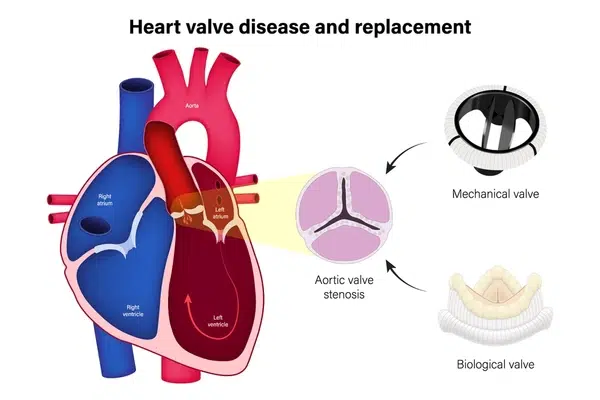
Heart valve disease occurs when one or more of the heart's four valves do not open or close properly. The two main problems are stenosis, where a valve is narrowed, and regurgitation, where a valve leaks. Symptoms include breathlessness, fatigue, swelling and palpitations. An echocardiogram confirms the diagnosis. Mild disease is monitored, while significant disease is treated with valve repair, valve replacement or a catheter based procedure.
Heart valve disease affects millions of people worldwide and becomes more common with age, yet many people know little about it until a doctor mentions a murmur or a scan reveals a problem. The good news is that valve disease is well understood and highly treatable. This guide explains the types of heart valve disease, the symptoms to watch for, what causes it, and when surgery or a procedure is needed.
What is heart valve disease?
The heart has four valves, the aortic, mitral, pulmonary and tricuspid. They act as one way doors, opening to let blood through and closing to stop it flowing backward. With every heartbeat these valves keep blood moving in the right direction. In heart valve disease, one or more valves stop working properly, which makes the heart work harder and reduces the efficiency of circulation. Over time this strain can damage the heart muscle itself if the problem is not addressed.
The two main types of valve problem
Valve stenosis
Stenosis means a valve has become stiff, thickened or narrowed so it cannot open fully. Blood must squeeze through a smaller opening, forcing the heart to pump harder. The most common and serious example is aortic stenosis, a narrowing of the aortic valve that is especially common in older adults.
Valve regurgitation
Regurgitation, also called a leaky valve or valve insufficiency, means a valve does not close tightly, so blood leaks backward with each beat. The heart then has to pump the same blood twice, which is inefficient and tiring for the muscle. Mitral regurgitation, a leak of the mitral valve, is one of the most common forms.
Some people have both stenosis and regurgitation in the same valve, or problems in more than one valve at once. The exact pattern is identified on an echocardiogram.
Symptoms of heart valve disease
Valve disease often develops slowly, and the body adapts so gradually that people do not realise how much their activity has reduced. Common symptoms include:
- Shortness of breath, especially on exertion or when lying flat
- Fatigue and reduced exercise tolerance
- Swelling of the ankles, feet or abdomen
- Palpitations or an irregular heartbeat
- Dizziness or fainting, particularly with aortic stenosis
- Chest discomfort during activity
- A heart murmur heard by a doctor through a stethoscope
The American Heart Association points out that some people with valve disease have no symptoms for years, which is why a murmur found on examination should always be investigated.
What causes heart valve disease?
There are several causes, and they vary by region and age:
- Age related changes, including calcium buildup that stiffens the valves, the leading cause of aortic stenosis in older adults
- Congenital valve abnormalities, such as a bicuspid aortic valve that a person is born with and that tends to wear out earlier
- Rheumatic heart disease, caused by an untreated streptococcal infection in childhood, still common across South Asia, Africa and the Middle East
- Infective endocarditis, an infection of the heart lining and valves
- Damage after a heart attack or from other heart muscle conditions
How is valve disease diagnosed and staged?
The central test is an echocardiogram, an ultrasound that shows the valves moving and measures how narrowed or leaky they are. Doctors use these measurements to grade the disease as mild, moderate or severe, which guides whether and when treatment is needed. An ECG, chest X ray and sometimes a cardiac catheter study or advanced imaging are added before surgery is planned. If you already have an echocardiogram, a specialist can review it. VNR offers a free review of your cardiac reports with an indicative cost estimate.
When is surgery needed?
Not every valve problem needs an operation. Mild and moderate disease is usually monitored with regular scans, sometimes for many years. Treatment is generally recommended when the disease becomes severe, when symptoms appear, or when scans show the heart is starting to enlarge or weaken under the strain. Acting at the right time, before the heart muscle is permanently damaged, gives the best long term result, which is why regular follow up of known valve disease is so important.
Treatment options
Valve repair
When possible, surgeons prefer to repair your own valve, particularly for leaking mitral valves, because keeping the natural valve has advantages and often avoids lifelong blood thinning medication.
Valve replacement
When a valve is too damaged to repair, it is replaced with a mechanical valve, which is very durable but requires lifelong blood thinners, or a tissue valve, which may not need long term blood thinners but does not last as long. Our page on heart valve replacement and repair explains how the choice is made.
Catheter based and minimally invasive procedures
For selected patients, especially those at higher surgical risk, a narrowed aortic valve can be replaced through a catheter without open surgery. The heart team decides suitability after reviewing your scans and overall health.
What to expect from recovery
Valve surgery is a well established and successful procedure. Patients usually spend a few days in hospital, including some time in intensive care, then recover gradually over several weeks. Most people notice a clear improvement in breathing and energy once the heart no longer struggles against a faulty valve. International patients generally plan to stay in India for a few weeks to cover treatment and early recovery before flying home.
How VNR Medical Service helps international patients
VNR Medical Service helps international patients access expert valve treatment at the NABH accredited DDMM Heart Institute in India, where the cardiac team performs valve repair and replacement. We coordinate your free report review, an indicative cost estimate, medical visa support, travel, treatment and a safe, fit to fly return. To begin, send your echocardiogram for review or contact our coordination team.
Why early treatment of valve disease matters
The heart is remarkably good at compensating for a faulty valve, which is both a blessing and a trap. For years it works harder to make up for the narrowed or leaking valve, and the person may feel only mildly limited. But this extra work comes at a cost. Over time the heart muscle can stretch, thicken and weaken, and once that damage is advanced it may not fully recover even after the valve is fixed. This is why cardiologists monitor valve disease closely and recommend treatment at the right moment, before irreversible strain sets in. Acting at the optimal time, rather than waiting until symptoms are severe, gives the best chance of a full recovery and a return to normal energy and activity. If you have known valve disease, keeping up with your scheduled scans is one of the most important things you can do.
Related pages
Common Questions
FAQs
The two main types are stenosis, where a valve becomes narrowed and stiff so it cannot open fully, and regurgitation, where a valve leaks because it does not close tightly. Some people have both in the same valve.
Surgery is generally recommended when valve disease becomes severe, when symptoms such as breathlessness appear, or when scans show the heart starting to enlarge or weaken. Mild and moderate disease is usually monitored with regular echocardiograms.
When a valve can be repaired, repair is often preferred because it keeps your natural valve and may avoid lifelong blood thinners. When a valve is too damaged, replacement with a mechanical or tissue valve is the safe and effective choice.
Yes. VNR Medical Service coordinates valve repair and replacement for international patients at the NABH accredited DDMM Heart Institute, often at a fraction of Western costs. Start with a free review of your echocardiogram for an indicative estimate.
Send us your cardiac reports. We reply within 48 hours.
Free clinical review by the DDMM cardiac team. No obligation. Our international patient coordinators reply 7 days a week.