Heart Bypass Surgery (CABG) Explained: Procedure, Risks and Recovery
By VNR Medical Service Editorial Team · Reviewed in line with our Medical Review Policy · June 19, 2026
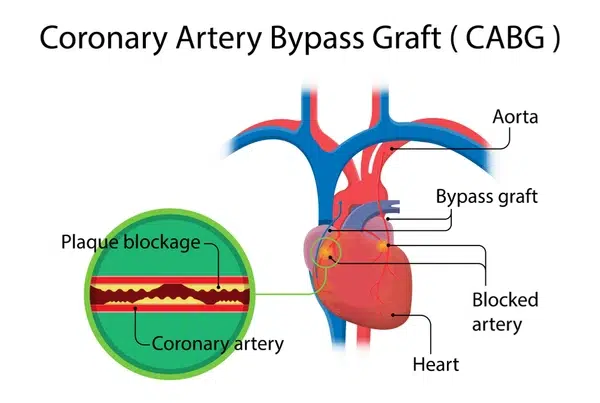
Heart bypass surgery (CABG) treats blocked coronary arteries by using a healthy blood vessel from elsewhere in the body to create a new route for blood to flow around the blockage. It is recommended for multiple or complex blockages and gives durable, long lasting results. Most patients spend a few days in hospital and recover over several weeks, returning to a full and active life.
Coronary artery bypass grafting, usually shortened to CABG and often simply called bypass surgery, is one of the most performed and most successful heart operations in the world. For patients facing it, the unknown can be the hardest part. This guide explains in plain language what heart bypass surgery is, who needs it, how the operation works, the risks, and what recovery looks like, including what international patients can expect when they have surgery in India.
What is heart bypass surgery?
In coronary artery bypass grafting, the surgeon takes a healthy blood vessel, called a graft, from the chest wall, arm or leg, and connects it so that blood can flow around a blocked or narrowed section of coronary artery. The blockage itself is not removed, instead a detour is built around it, restoring a reliable blood supply to the heart muscle beyond the blockage. Several grafts are often created in a single operation, which is why you may hear terms such as double, triple or quadruple bypass, referring to the number of vessels bypassed.
Who needs bypass surgery?
Bypass surgery is generally recommended for people with several blocked coronary arteries, with a blockage in a critical position such as the left main artery, or with triple vessel disease, especially when they also have diabetes or reduced heart pumping function. It is one of the main treatments for advanced coronary artery disease. For single or simpler blockages, angioplasty with a stent may be preferred instead. Our guide on CABG versus angioplasty explains how doctors choose between the two.
How does the operation work?
The surgery is carried out under general anaesthetic. Traditionally the surgeon reaches the heart through the breastbone, and the heart may be temporarily stopped while a heart lung machine takes over the circulation, known as on pump surgery. The grafts are then sewn into place. In many cases surgeons can operate on a beating heart without the machine, called off pump surgery, and in selected patients smaller, minimally invasive incisions can be used. The choice of technique depends on the individual and is made by the surgical team.
On pump and off pump surgery
On pump surgery, using the heart lung machine, gives the surgeon a still and bloodless field and remains the standard for many operations. Off pump surgery, performed on the beating heart, may be chosen for certain patients to avoid the machine. Both are well established, and the right approach is the one best suited to your anatomy and health.
What are the risks?
Like any major surgery, CABG carries some risk, including bleeding, infection, irregular heart rhythms, and, less commonly, more serious complications. However, it is a mature and well understood operation, and in experienced centres the great majority of patients come through safely and benefit greatly. Your team will assess your individual risk based on your age, heart function and other health conditions, and will discuss it openly with you before surgery.
Recovery after bypass surgery
Recovery happens in stages. Immediately after surgery you spend a day or two in intensive care, where you are closely monitored, followed by several days on a ward as you begin to move, eat and breathe normally again. Once home, recovery continues over several weeks, with a gradual return to walking, daily activities and eventually exercise. Many patients take six to twelve weeks to feel substantially back to normal, and cardiac rehabilitation, where available, helps this along safely. Our blog on how long you stay in India after bypass surgery explains the timeline for international patients.
Life after bypass surgery
Bypass surgery can give people many years of improved health and relief from symptoms such as angina. The grafts provide a durable new blood supply, but the surgery does not cure the underlying tendency to form plaque, so long term success depends on continuing medication, attending follow up, and maintaining heart healthy habits such as not smoking, eating well and staying active. Most patients return to work, travel and an active life once their cardiologist confirms they are ready.
Bypass surgery in India for international patients
India is one of the world's leading destinations for affordable, high quality cardiac surgery. International patients choose it for experienced surgical teams, accredited hospitals, short waiting times and costs that are often a fraction of those at home. You can learn more on our heart bypass surgery in India page, and see indicative pricing in our blog on how much bypass surgery costs in India. Final cost depends on your reports and the specialist's plan.
How VNR Medical Service helps
VNR Medical Service coordinates bypass surgery for international patients at the NABH accredited DDMM Heart Institute in India. We handle your free report review, an indicative cost estimate, medical visa support, travel, treatment and a safe, fit to fly return. To begin, send your angiography report or contact our coordination team.
Preparing for bypass surgery
Good preparation makes surgery safer and recovery smoother. Before the operation your team will run tests to confirm your fitness, review your medicines, and advise on which to stop or continue. You will usually be asked to stop smoking well in advance, as this lowers the risk of complications and helps healing. Arriving in good general health, with blood sugar and blood pressure controlled, supports a better outcome. For international patients, VNR helps gather and share the right reports in advance so the surgical team can plan thoroughly before you arrive, which avoids delays once you reach India.
Diet and lifestyle after bypass surgery
The new grafts give your heart a fresh blood supply, but protecting that gift depends on the choices you make afterwards. A heart healthy diet that is low in saturated fat, salt and refined sugar, and rich in vegetables, fruit, whole grains and healthy oils, helps keep cholesterol in check and slows new plaque from forming. Regular gentle activity, building up as your team advises, strengthens the heart. Not smoking is essential. Taking prescribed medicines consistently and attending follow up appointments complete the picture. Patients who embrace these habits often enjoy many years of improved health after their surgery.
How successful is bypass surgery?
Coronary artery bypass grafting has been performed for decades and is one of the most studied operations in medicine, with high success rates in experienced centres. The great majority of patients gain lasting relief from angina and a meaningful improvement in quality of life and, in many cases, in survival. The grafts can keep working for many years, particularly arterial grafts taken from the chest wall, which are known for their durability. As with any treatment the outcome depends on the individual, including age, heart function and other health conditions, but for the right patient bypass surgery is a reliable, life improving procedure that has stood the test of time.
Related pages
Common Questions
FAQs
The operation itself usually takes several hours, depending on the number of grafts and the complexity. This is followed by a day or two in intensive care and several days on a ward before discharge.
Bypass surgery provides a durable new blood supply that can last many years, but it does not cure the underlying disease. Long term success depends on medication, follow up and heart healthy habits to slow new plaque from forming.
Most patients spend a few days in hospital, then recover over several weeks at home, often feeling substantially better within six to twelve weeks. International patients usually plan a stay of three to four weeks in India before flying home.
Indicative costs in India are typically a fraction of those in Western countries, with the exact figure depending on the number of grafts, technique and hospital stay. VNR provides a free report review and an indicative estimate before you travel.
Send us your cardiac reports. We reply within 48 hours.
Free clinical review by the DDMM cardiac team. No obligation. Our international patient coordinators reply 7 days a week.