7 Early Warning Signs of Heart Blockage You Should Not Ignore
By VNR Medical Service Editorial Team · Reviewed in line with our Medical Review Policy · June 13, 2026
The early warning signs of heart blockage include chest discomfort or pressure, shortness of breath, unusual fatigue, palpitations, dizziness, pain spreading to the arm, jaw or back, and swelling in the legs. Blockages build up gradually through a process called atherosclerosis. Tests such as an ECG, stress test and coronary angiography confirm the diagnosis, and treatment ranges from lifestyle changes and medication to angioplasty or bypass surgery.
A blocked coronary artery is one of the most common and most serious heart problems, yet its early warning signs are often missed or brushed aside. Heart blockage develops slowly over years, and the body can hide it well until a sudden event forces attention. Learning to recognise the early warning signs of heart blockage gives you the chance to act before a heart attack happens. This guide explains the seven signs to watch for, what causes blockages, and the treatment options available to international patients.
What is heart blockage?
The term heart blockage usually refers to a narrowing of the coronary arteries, the blood vessels that supply the heart muscle itself. Over years, deposits of cholesterol, fat and calcium build up inside the artery walls and form plaque, a process called atherosclerosis. As the plaque grows, the channel for blood narrows and the heart muscle may not get enough oxygen, particularly during exertion. This underlying condition is called coronary artery disease. When several arteries are affected it may be described as triple vessel disease.
The World Health Organization reports that cardiovascular diseases are the leading cause of death globally, and coronary artery disease is the most common form. The encouraging news is that the warning signs, when recognised, give time to act.
The 7 early warning signs of heart blockage
1. Chest discomfort or pressure (angina)
The most classic sign is a tight, heavy or squeezing sensation in the chest, often during exertion or stress and easing with rest. It may feel like pressure rather than sharp pain. Any new or worsening chest discomfort should be assessed.
2. Shortness of breath
When the heart cannot pump efficiently because of reduced blood flow, you may feel breathless during activities that never used to trouble you, or even at rest in more advanced cases.
3. Unusual fatigue
Persistent, unexplained tiredness can be an early sign, especially in women. If everyday tasks suddenly feel exhausting, your heart may be struggling.
4. Palpitations or irregular heartbeat
A racing, pounding or skipping heartbeat can occur when blood flow to the heart is reduced. Occasional palpitations are common, but frequent or sustained ones deserve evaluation.
5. Dizziness or light headedness
Reduced blood flow can lower the supply reaching the brain, causing dizziness, light headedness or, in serious cases, fainting. This should never be ignored.
6. Pain spreading to the arm, jaw, neck or back
Discomfort that radiates from the chest into the left arm, both arms, the jaw, neck or upper back is a well known warning sign and can signal that a heart attack is developing.
7. Swelling in the legs, ankles or feet
When the heart cannot keep up, fluid can build up in the lower body, causing swelling. This often points to strain on the heart and needs medical review.
The danger of silent blockage
Not everyone gets clear warning signs. Some people, particularly those with diabetes, have significant blockages with few or no symptoms until a heart attack occurs. This is why people with risk factors should have regular heart check ups even when they feel well. A blockage found early can often be treated before it becomes an emergency.
What raises your risk of heart blockage?
- High blood pressure
- High cholesterol
- Diabetes
- Smoking and tobacco use
- Obesity and physical inactivity
- An unhealthy diet high in saturated fat and salt
- A family history of early heart disease
- Increasing age and chronic stress
People of South Asian origin tend to develop coronary artery disease earlier and more aggressively, which makes awareness and early screening especially important for patients from the region.
How is heart blockage diagnosed?
If blockage is suspected, a cardiologist may use:
- ECG to record the heart's electrical activity
- Treadmill or stress test (TMT) to assess the heart under exertion
- Echocardiogram to view the heart muscle and pumping function
- Coronary angiography, the definitive test that shows the exact location and severity of each blockage
If you already have these reports, a specialist can review them and advise on the next step. VNR provides a free cardiac report review so you receive an opinion and an indicative cost estimate before travelling.
Can heart blockage be treated?
Yes. The approach depends on how many arteries are blocked and how severely.
Lifestyle and medication
Mild blockages are often managed with cholesterol lowering and blood pressure medicines, blood thinners where appropriate, and lifestyle changes such as stopping smoking, eating well and exercising. These steps slow or halt the progression of disease.
Angioplasty and stenting
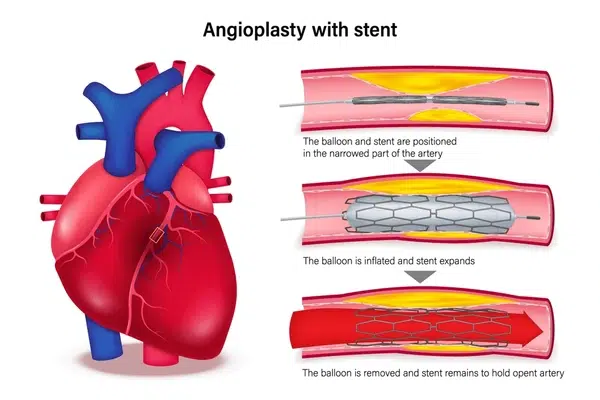
For significant single or limited blockages, angioplasty and stenting opens the artery with a balloon and a stent. It is minimally invasive with a quick recovery.
Bypass surgery (CABG)
When multiple arteries are blocked, coronary artery bypass grafting often gives the best long term result by routing blood around the blocked sections.
When is it an emergency?
Call emergency services immediately if chest pain is severe or lasts more than a few minutes, spreads to the arm or jaw, or comes with breathlessness, sweating, nausea or fainting. These can indicate a heart attack, where rapid primary PCI can save heart muscle and life.
How VNR Medical Service helps international patients
If your reports show a blockage, acting early protects your heart. VNR Medical Service connects international patients with affordable, advanced cardiac care at the NABH accredited DDMM Heart Institute in India. We coordinate a free report review, an indicative cost estimate, medical visa support, travel, treatment and a safe return home. To start, contact our coordination team.
Can heart blockage be prevented?
To a large degree, yes. Because most coronary blockages build up over years through lifestyle related factors, the same habits that lower your risk also slow disease that has already started. Not smoking is the single most powerful step. A diet rich in vegetables, fruit, whole grains and healthy fats, with less salt, sugar and fried food, helps control cholesterol and blood pressure. Regular physical activity, maintaining a healthy weight, limiting alcohol and managing stress all protect the arteries. For people with diabetes or high blood pressure, keeping those conditions tightly controlled is essential. Prevention does not guarantee you will never develop blockage, but it dramatically improves your odds and your long term heart health.
Recovery after treatment for a blocked artery
Recovery depends on the treatment. After angioplasty and stenting, most patients go home within a day or two and return to light activity quickly, with blood thinning medication to keep the stent clear. After bypass surgery, the hospital stay is longer, usually several days including intensive care, followed by a few weeks of supervised recovery before patients are declared fit to fly home. Cardiac rehabilitation, where it is available, helps people rebuild strength and confidence safely. International patients treated in India typically plan for a stay of a few weeks to cover the procedure and early recovery, and VNR coordinates accommodation and follow up throughout.
Related pages
Common Questions
FAQs
Early signs include chest discomfort or pressure on exertion, shortness of breath, unusual fatigue, palpitations, dizziness, pain spreading to the arm or jaw, and swelling in the legs. Some people, especially those with diabetes, have few symptoms until a heart attack occurs.
Mild blockages can often be managed with medication and lifestyle changes that slow the disease. Significant blockages usually need angioplasty with a stent or bypass surgery. A cardiologist decides based on your angiography.
Coronary angiography is the definitive test, showing the exact location and severity of each blockage. An ECG, stress test and echocardiogram are often done first to assess the heart.
Yes. VNR Medical Service coordinates angioplasty and bypass surgery for international patients at the NABH accredited DDMM Heart Institute, at a fraction of Western costs. Start with a free review of your reports for an indicative estimate.
Send us your cardiac reports. We reply within 48 hours.
Free clinical review by the DDMM cardiac team. No obligation. Our international patient coordinators reply 7 days a week.